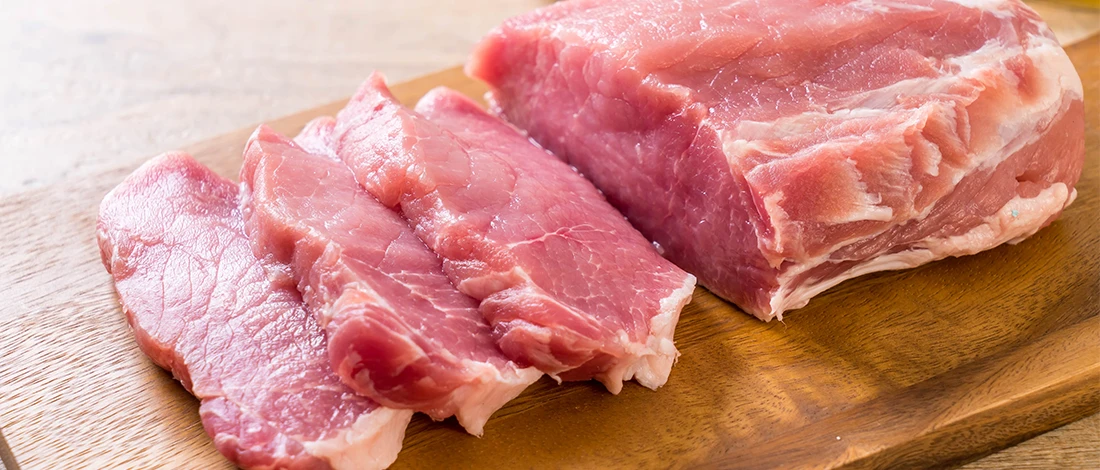
What Is the Red Juice in Steak? (Is It Actually Blood?)

As someone who follows the carnivore lifestyle, I’m passionate about steak’s flavor and texture. However, like many people who eat meat, I’ve noticed that a red-colored liquid leaks out when you cut into a juicy piece of steak.
To give you the most accurate, well-rounded answer, I've spent weeks digging into research and talking with experts, including my local butcher.
This article aims to discuss the red juice in steak, dispelling common misconceptions and shedding light on what it truly comprises.
Quick Summary
- "Red juice" in steak is actually a mixture of a protein called myoglobin and water.
- Myoglobin in red meat is released by muscle fibers when they are cut.
- Well-done steaks have less red liquid because heat breaks down myoglobin.
What is the Red Juice IN STEAK
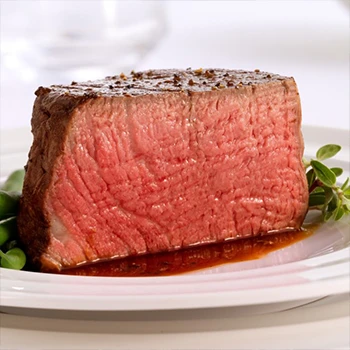
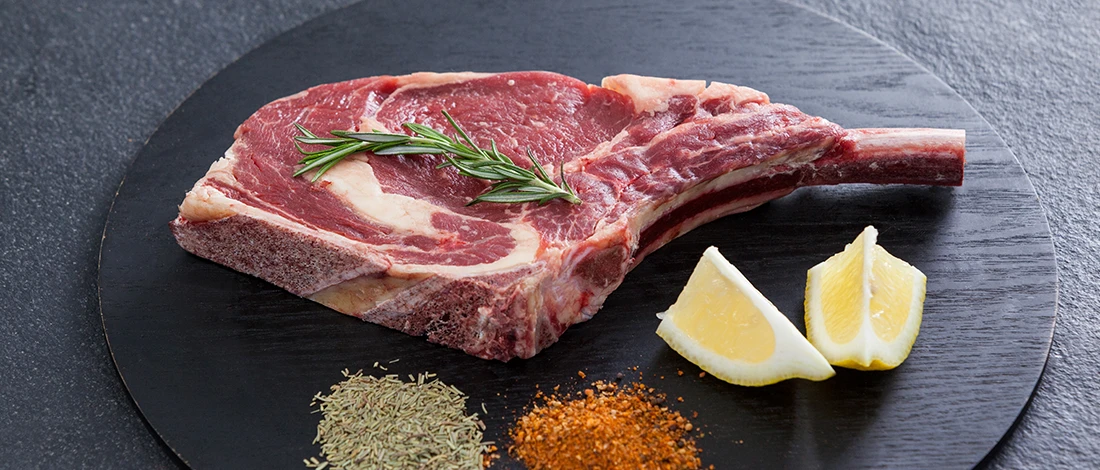
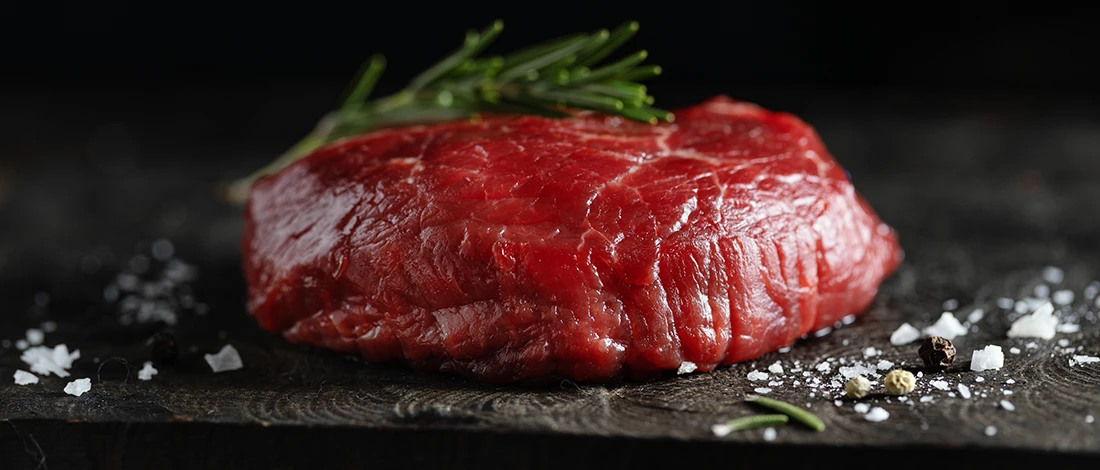
The red juice in steak, often called 'myoglobin,' is a protein found in muscle tissue. The good news is that this red liquid is not actually blood. Blood contains hemoglobin, a molecule that uses iron to carry oxygen from the lungs and deliver it throughout the body to cells [1]. Hemoglobin's iron changes color from brown-blue to red when exposed to oxygen, which is why people mistake the red liquid in steak for blood. In the slaughter process, blood is fully drained from the carcass, so what ends up on your plate is not blood. Instead, myoglobin is the protein responsible for storing oxygen within muscle cells and releasing it when needed [2]. As meat ages, the muscle tissue breaks down and releases both liquid and myoglobin. So the red juice in your steak is primarily water mixed with myoglobin — and its color changes from red to brown as the meat cooks, just as myoglobin reacts to heat and oxygen.
WHY DOES MEAT HAVE MYOGLOBIN?
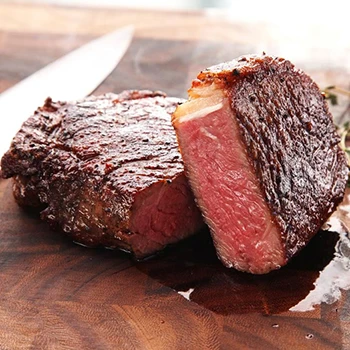
Meat has myoglobin because myoglobin carries oxygen via a heme group, which contains iron.
This metal gives the protein myoglobin its characteristic red pigment - hence, your steak appears to have a red hue. This is why we have the term “red meat,” and it is why you think you have a bloody steak.
Since myoglobin is a protein found in the muscle tissue, it can be released as a red liquid when the steak is cut. This is why steaks appear to bleed - although it's just water and myoglobin running out.
The amount of myoglobin in a particular cut of meat will vary depending on the animal, the muscle location, and the animal's age. For example, cows are slaughtered later in life than pigs, so beef has more myoglobin than pork.
Additionally, certain muscle tissue in the animal will have more myoglobin than others. Muscles used frequently, such as those in the legs or shoulders, will have more myoglobin than those used less frequently [3].
Also Read: What Do Ice Crystals in Meat Signify?
Myoglobin in Your Steak
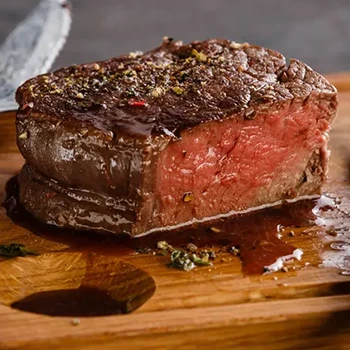
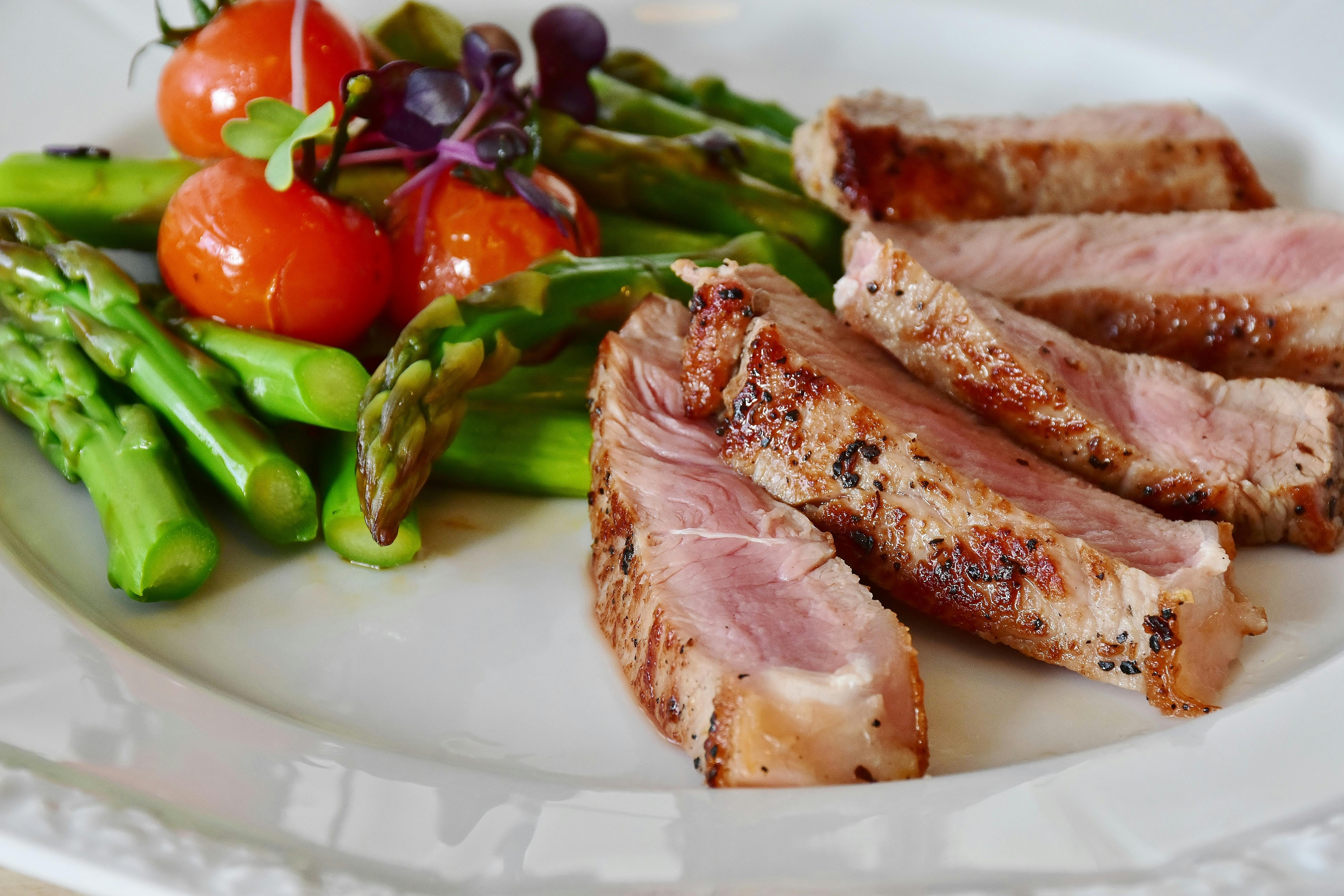
When a steak is cooked, the myoglobin in the meat changes color when exposed to heat. The myoglobin remains red or pink at lower temperatures, which is why a rare or medium-rare steak has a pinkish hue.
As the temperature of the meat increases, the myoglobin darkens. This is why well-done steaks are brown-gray and don't have the same red liquid as raw meat, rare, or medium-rare steaks.
It is worth noting that the red juice in the steak does not indicate how well-cooked the red meat is. Many assume that if you eat a steak that is still releasing red fluid, it must be undercooked. However, this is different.
And, if you let the steak stand for 10 minutes or so after cooking, you will discover less myoglobin and water on your plate.
Many professional chefs prefer to cook medium-rare or rare steak, allowing the meat to retain more natural flavor and tenderness.
When a steak is cooked to a well-done level, it can become dry and tough, making it less enjoyable to eat.
"Consuming raw beef is dangerous, as it can harbor illness-causing bacteria."
- Gavin Van De Walle, Registered Dietician
Related Articles:
- Is It Safe to Eat Blue Steak?
- Why Does Meat Turn Brown?
- Best Red Meats to Eat
FAQs
What Does Myoglobin Taste Like?
Myoglobin tastes like a perfect steak itself. Since myoglobin is found in the muscle tissue, it carries the same flavor and juiciness as meat. It is the reason behind the faintly 'metallic' taste of beef.
Is Well Done Steak Healthier?
Well-done steak is not necessarily healthier than rare or medium-rare steak. Well-done steaks have fewer nutrients or health benefits than rare or medium-rare steaks.
How Do Butchers Drain Blood?
Butchers drain blood by hanging the animal upside down and allowing gravity to pull the blood out of the carcass. They may also use a mechanical pump system to help speed up the process. The drained blood is then collected in containers for later disposal or use.
References:
- https://byjus.com/biology/differentiate-between-hemoglobin-and-myoglobin/
- https://pediaa.com/difference-between-hemoglobin-and-myoglobin/
- https://www.britannica.com/technology/meat-processing/Myoglobin-content